Anion Gap Calculator for Renal Disease: Clinical Overview
What the Anion Gap Measures in Kidney Disease
The anion gap is a useful way to gauge how much unmeasured acid is present in the body. In renal disease, that is important because impaired kidney function can affect electrolytes and result in metabolic acidosis. The result is never a diagnosis by itself, but it is a valuable initial assessment tool for understanding whether acid accumulation, electrolyte imbalance, or another metabolic disturbance may be present.
In standard clinical assessment, the anion gap helps show whether the body is dealing with surplus acids that are not directly measured on a standard serum chemistry panel. Kidney-related problems can change this number upward or sometimes leave it within a normal reference range even when acidosis is present. That is why interpretation in the setting of kidney disease requires more than a single laboratory result.
When kidney function declines, the body may have trouble removing acids and maintaining acid-base balance. Over time, this can produce a measurable change in serum values, especially sodium, chloride, and bicarbonate. The anion gap is a simple calculation, but its clinical meaning depends on the overall context, including kidney function, albumin level, and the likely etiology of the abnormality.
How to Use an Anion Gap Calculator
An Anion Gap Calculator relies on key laboratory inputs from a serum chemistry panel, usually sodium, chloride, and bicarbonate. Certain calculators provide albumin adjustment, which is especially important in kidney disease because low albumin is common and can obscure the severity of the acid-base disorder.
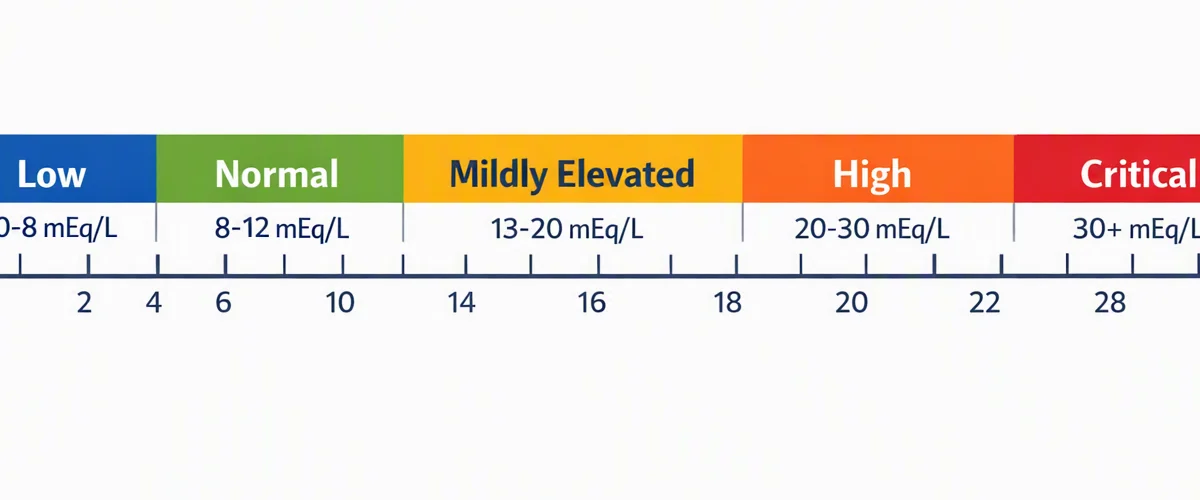
To operate the calculator correctly, enter the most recent laboratory values exactly as reported. The result is only as accurate as the inputs, so confirm the units and the collection time. In practice, the calculator supports calculation and initial interpretation, but it does not replace clinical judgment, diagnostic evaluation, or follow-up testing when needed.
A common process is:
- Inspect the serum chemistry panel for sodium, chloride, and bicarbonate.
- Enter the values into the Anion Gap Calculator.
- Check whether albumin is low and apply a correction factor if needed.
- Match the result with the usual reference range and the patient’s kidney function.
- Treat the result as part of screening and risk stratification for metabolic acidosis.
Because renal disease often changes multiple parameters at once, the calculator is best used as part of a broader clinical assessment. A mildly abnormal result may suggest compensation, volume status, or mixed disorders rather than a single cause.
Anion Gap Formula and Calculation Basics
The typical anion gap formula is frequently expressed as sodium minus chloride minus bicarbonate. Certain laboratories include potassium, but the usual interpretation relies on the more basic version. The concept is straightforward: the calculation measures the gap between measured cations and measured anions, which in turn reflects unmeasured ions and acids in the blood.
A normal anion gap means the calculation falls within the expected laboratory reference range. A high anion gap indicates accumulation of unmeasured acids, which can occur in renal failure, lactic acidosis, ketoacidosis, or toxin exposure. In kidney disease, the key point is not merely whether the value is elevated, but whether the pattern fits the overall clinical picture.
Interpreting the result also depends on laboratory values and local standards. Different labs may report marginally different reference ranges because of analytic methods and albumin effects. For that reason, it is best to assess each laboratory result in context rather than relying on a single cutoff.
Practical point: a “normal” result does not always mean there is no acid-base problem. In renal disease, albumin, bicarbonate, and other serum values may alter the calculation enough to obscure the underlying abnormality.

Why Kidney Failure Can Raise the Anion Gap
In chronic kidney disease, the kidneys gradually decrease the ability to clear acids and regenerate bicarbonate, which can result in acid retention. As the condition progresses, this may produce a elevated anion gap, especially when unmeasured acids gather faster than they can be excreted. The degree of elevation often shows severity and the balance between ongoing acid load and kidney function.
Acute kidney injury can also increase the anion gap. When renal clearance falls suddenly, retained acids may collect quickly, and the patient can develop renal failure-related metabolic disturbance. In these settings, the elevated value may indicate a need for immediate clinical evaluation, especially if there are symptoms, worsening kidney function, or other abnormal laboratory findings.
Uremia is a classic renal cause of elevated anion gap. It indicates the buildup of nitrogenous waste products and other unmeasured acids that the kidneys normally remove. As uremia intensifies, acid-base balance becomes harder to maintain, and the calculator result may help reveal the extent of the metabolic burden.
In practice, an elevated anion gap in kidney disease often points to a combination of mechanisms rather than a single abnormality. The result should be considered alongside the patient’s history, medications, volume status, and trend in kidney function.
Fixing the Anion Gap for Reduced Albumin
Albumin is a major unmeasured anion in the blood, so when albumin is low, the computed anion gap may appear falsely normal or only slightly elevated. This is especially important in renal disease, where hypoalbuminemia can occur due to inflammation, protein loss, malnutrition, or chronic illness. A low albumin level can obscure clinically meaningful acidosis unless a corrected anion gap is used.
Albumin adjustment improves acid-base interpretation by accounting for the missing negative charge that albumin normally provides. In practical terms, the correction factor estimates what the gap would look like if albumin were within the usual range. This can alter diagnostic thinking, particularly when the measured result seems equivocal but the patient has signs of metabolic acidosis.
Using a corrected value is especially helpful when the clinical picture suggests kidney-related acid retention but the raw result is not remarkable. It also aids more accurate management decisions, since underestimating the severity of acidosis can delay treatment or further workup.
For best results, read the corrected anion gap with the rest of the acid-base data. Albumin correction betters analysis, but it should not be used in isolation. The most reliable approach combines the calculator, serum chemistry panel, and clinical assessment.
Reading Expected vs Elevated Anion Gap in Renal Disease
Expected anion gap metabolic acidosis in kidney disease often indicates bicarbonate loss or impaired acid secretion rather than accumulation of unmeasured acids. A common cause is kidney tubular dysfunction, where the kidneys cannot properly acidify urine or reclaim bicarbonate. This is often seen in forms of tubular injury and can be related to renal tubular acidosis.
Elevated anion gap metabolic acidosis usually suggests retained acids, including those related to uremia or other systemic processes. In kidney disease, this often becomes more prominent as filtration falls and acid handling worsens. However, an elevated value does not automatically prove kidney disease is the only cause, because concurrent disorders such as lactic acidosis may also contribute.
A typical result does not exclude renal involvement. Some patients with kidney disease have a normal gap because they are losing bicarbonate in a tubular pattern or because the elevated acid load is balanced by low albumin. For that reason interpretation must distinguish between the type of acidosis and the stage of disease.
Clinicians often use the anion gap to narrow the differential diagnosis and decide what to evaluate next. The pattern helps with diagnosis, but it is most useful when integrated into the full acid-base picture.
Frequent Causes of Anion Gap Changes in Renal Patients
A number of conditions can alter the anion gap in patients with kidney disease. Some are kidney-related, while others are frequent metabolic complications that occur alongside renal dysfunction. The most important causes include renal tubular acidosis, uremia, lactate accumulation, and ketones.
Renal tubular acidosis often causes a normal anion gap metabolic acidosis because the issue is impaired acid secretion or bicarbonate handling rather than retention of unmeasured acids. By contrast, uremia in more advanced renal disease more often elevates the anion gap because retained organic acids accumulate in the bloodstream.
Lactate can increase in patients with poor perfusion, sepsis, hypoxia, or severe illness. If kidney function is impaired at the same time, clearance may be decreased and the acid-base disorder can become worse. Ketones are another important cause, especially when there is poor intake, insulin deficiency, or catabolic stress.
- Renal tubular acidosis: frequently tied to normal anion gap metabolic acidosis.
- Uremia: often linked to high anion gap metabolic acidosis in advanced renal dysfunction.
- Lactate: can indicate tissue hypoperfusion or another systemic stressor.
- Ketones: may indicate fasting, diabetic ketoacidosis, or other catabolic states.
As these causes may overlap, the calculator is best used as a starting point for etiologic assessment rather than a final answer.
Clinical Context: When the Calculator Is Not Enough
The Anion Gap Calculator is valuable, but it cannot fully define an acid-base disorder. When the result is unexpected, the next step often includes an arterial blood gas and review of serum bicarbonate to verify the existence and severity of acidosis. This additional testing helps determine whether the body is compensating appropriately or whether a mixed disorder is present.
The delta gap is another useful concept when interpreting a high anion gap. It contrasts the increase in the https://anion-gap-results617.lucialpiazzale.com/what-medicines-can-cause-a-high-anion-gap gap with the drop in bicarbonate and can imply whether more than one metabolic disturbance is occurring. This is especially useful in renal disease, where the picture may include both retained acids and bicarbonate loss.
Clinical context matters because kidney disease rarely exists in isolation. The patient’s symptoms, medication list, hemodynamic status, infection risk, and recent trends in kidney function all affect interpretation. A calculator can identify an abnormality, but the diagnosis and management plan require a broader review.
Use the calculator as part of a stepwise process: screen, confirm, address, and contextualize. That approach supports safer decisions and better risk stratification when evaluating acid-base balance in renal patients.
Frequently Asked Questions
What is the anion gap and why does it matter in renal disease?
The anion gap is a calculation that estimates unmeasured acids in the blood. It matters in renal disease because impaired kidney function can lead to metabolic acidosis, acid retention, and electrolyte imbalance. The result helps identify whether the pattern is more consistent with high anion gap metabolic acidosis, normal anion gap metabolic acidosis, or another acid-base problem.
How do I use an Anion Gap Calculator correctly?
Enter the sodium, chloride, and bicarbonate values from the serum chemistry panel exactly as reported. If albumin is low, consider using a corrected anion gap because hypoalbuminemia can hide the abnormality. Then interpret the result together with kidney function, clinical assessment, and any supporting laboratory values such as an arterial blood gas.
Why can low albumin alter the anion gap?
Albumin is a important unmeasured anion, so low albumin decreases the measured gap and can make the value appear deceptively normal. This is why albumin adjustment is essential in kidney disease. A corrected anion gap gives a more accurate estimate of the true acid-base status when hypoalbuminemia is present.
Can kidney disease cause a normal anion gap metabolic acidosis?
Yes. Kidney disease can cause a normal anion gap metabolic acidosis, especially when kidney tubular dysfunction or renal tubular acidosis is present. In those cases, the problem is often bicarbonate loss or impaired acid secretion rather than accumulation of unmeasured acids. The pattern may differ from the elevated gap seen with uremia.
At what point should an elevated anion gap in kidney disease be evaluated further?
An elevated gap should be evaluated further when it is persistent, worsening, or accompanied by symptoms, low serum bicarbonate, or abnormal arterial blood gas results. It also deserves follow-up when the cause is unclear or when other processes such as lactic acidosis or ketones may be contributing. In renal disease, the finding should always be interpreted in context rather than in isolation.