Can An infection Increase the Anion Gap? A Guide to What This Means
What’s the Anion Gap?
The anion gap is a lab calculation used to help evaluate electrolytes and the body’s acid-base status. It compares the main measured positive and negative ions in the blood, especially sodium and chloride, to approximate the amount of unmeasured anions present. This makes it a useful clue in detecting an acid-base disorder, especially metabolic acidosis.
Put simply, the anion gap helps clinicians ask whether something is building up in the bloodstream that should not be there. That “something” may be acids, toxins, or metabolic byproducts. When those substances increase, the result is often an elevated anion gap or high anion gap, both of which can point to a serious underlying cause.
The result is not a diagnosis by itself. It is one piece of clinical evaluation and lab interpretation that must be understood alongside symptoms, history, and other tests.
Ways the Anion Gap Calculator Operates
This anion gap calculator uses routine lab values from a blood test to determine that value fast. Usually, it relies on the connection between sodium, chloride, and serum bicarbonate. These values are usually obtained from a basic metabolic panel, which is a standard blood chemistry test.
The calculator helps reduce arithmetic errors and allows faster review of the result against the expected reference range. Because the expected range can differ a little by laboratory method, the calculator should always be interpreted with the relevant lab’s standards in mind.
While the formula is straightforward, the meaning of the result is less simple. A normal result does not always rule out disease, and a high result does not always mean the same thing. This is why clinicians interpret the number with the patient’s overall condition, sometimes adding an arterial blood gas, serum lactate, or other studies to narrow down the problem.
Practically, the anion gap calculator is a helpful aid for interpreting electrolyte balance and identifying a possible gap metabolic acidosis. It is most helpful when used as part of a larger diagnostic workup.
Could Infection Elevate the Anion Gap?
Yes, infection can increase the anion gap, notably when it leads to sepsis or a different form of systemic illness that disrupts normal metabolism. The most important pathway is lactic acidosis, in which lactate rises because tissues are not getting enough oxygen or are unable to use oxygen normally.
Not every infection causes a high anion gap. A slight or localized infection may not affect blood chemistry at all. But when infection becomes severe, spreads through the body, or causes organ dysfunction, it can trigger metabolic acidosis and a high anion gap.
This is why the answer depends on the type and severity of illness. A simple infection may leave the anion gap normal, while a systemic infection can shift the patient’s acid-base status quickly. In those cases, the elevated number may reflect infection-related acidosis rather than a primary kidney or toxin problem.
Clinicians often use the anion gap as an early clue that the body is under stress. When infection is severe, a rising gap may suggest the need for urgent evaluation and prompt treatment.
Why Infection May Increase the Anion Gap
Infectious illness can increase the anion gap when the body starts producing more lactate than it can remove. This often happens during hypoperfusion, when blood flow to tissues is reduced, or during hypoxia, when oxygen delivery is insufficient. Cells then move toward anaerobic metabolism, which produces more lactate as a byproduct.
As lactate accumulates, the blood becomes more acidic. That acid load consumes bicarbonate and contributes to a gap metabolic acidosis. The anion gap rises because the blood contains more unmeasured acids, even though the standard electrolyte panel may not directly show those substances.
Severe illness can also impair the body’s ability to clear lactate through organ dysfunction. When the liver, kidneys, or circulation are under stress, acid handling becomes less efficient. In that setting, the combination of infection, tissue stress, and reduced clearance can produce an elevated anion gap.
In other words, the body is signaling that its normal chemistry is being disrupted. The number itself is not the disease; it is a marker that helps reveal the underlying process.
Further Typical Causes of a Increased Anion Gap
Even though infection is an important cause, it is not the only one. A high anion gap can stem from several different conditions, and careful lab interpretation is needed to sort them out.
- Diabetic ketoacidosis: Ketones build up when the body cannot use glucose properly, creating a strong acid load.
- Kidney failure: Impaired kidney function decreases the elimination of acids and other metabolic waste products.
- Toxic alcohols: Substances such as methanol or ethylene glycol can produce dangerous acids.
- Salicylates: Aspirin toxicity can disrupt metabolism and lead to acid-base abnormalities.
These causes matter because they can appear alike at first glance. A person with nausea, confusion, or rapid breathing may have infection, diabetic ketoacidosis, kidney failure, or toxin exposure. That is why the anion gap is only one part of the full picture.
Sometimes, more than one issue is present at the same time. For example, infection may worsen diabetic ketoacidosis, or kidney failure may make it harder to recover from infection-related acidosis. A thorough medical assessment helps tell apart these possibilities.
Indicators That May Point to a Serious Condition
A altered anion gap doesn't cause symptoms by itself, but the root condition often does. When infection or another cause is driving a high anion gap, symptoms may include shortness of breath, confusion, nausea, and dehydration.
This matters because they can signal increasing metabolic stress or an acute emergency. Shortness of breath may reflect compensation for metabolic acidosis. Confusion may suggest inadequate circulation, toxin exposure, or severe systemic illness. Nausea and dehydration often appear when the body is working hard to maintain balance.
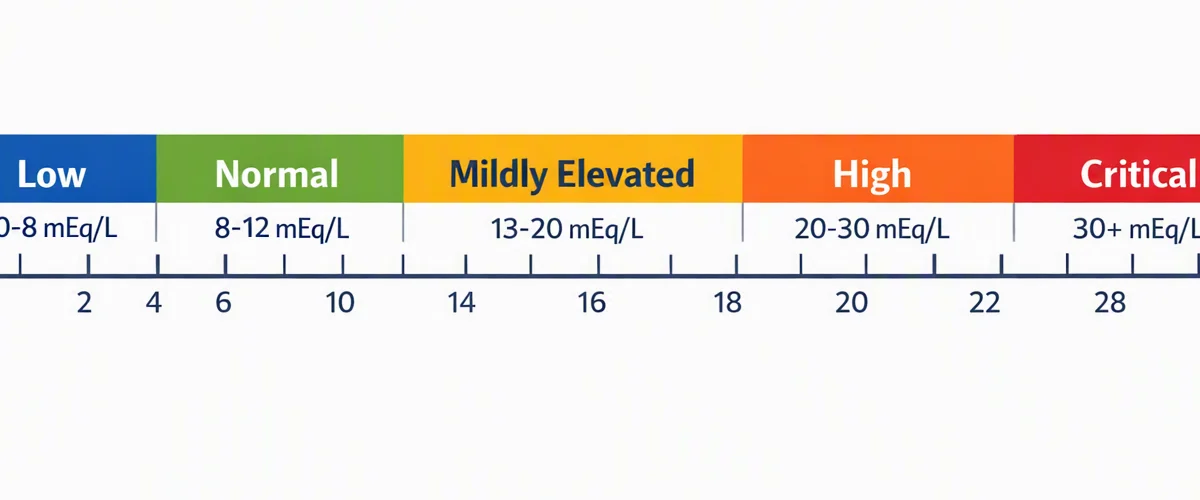
Symptom patterns can help guide the next step, but they do not replace testing. A person with these symptoms may need immediate evaluation, especially if infection is suspected. In that case, blood tests and clinical findings together help determine whether the cause is infection-related acidosis or something else.
In what way do Clinicians Analyze the Result
Healthcare providers analyze the result by pairing it with the basic metabolic panel, an arterial blood gas, and usually a serum lactate level. Their purpose is to determine whether the patient has acidosis, how severe it is, and whether lactate accumulation is the likely driver.
Albumin also matters because low albumin can decrease the measured anion gap and hide a problem. Since albumin carries a negative charge, changes in its level can change the apparent gap. This is one reason the raw number should not be viewed in isolation.
When a high anion gap appears, clinicians consider the patient’s oxygen levels, blood pressure, hydration, and infection risk. If the arterial blood gas shows acidemia and the serum lactate is elevated, lactic acidosis becomes more probable. That finding supports infection-related acidosis, especially when fever, abnormal vital signs, or organ dysfunction are present.

Interpretation is essentially a process of tracing down the cause through lab interpretation and bedside assessment. The calculator gives a number, but the diagnosis comes from the broader diagnostic workup.
When to Get Urgent Care
Prompt medical care is essential when a high anion gap appears with urgent warning signs. This may include breathing quickly, fever, and hypotension, especially if they occur with weakness, disorientation, or getting sicker.
Rapid breathing may indicate the body is trying to compensate for metabolic acidosis. Fever can point toward infection, and low blood pressure may suggest reduced blood flow or severe sepsis. Together, these findings can signal a condition that needs prompt treatment.
If infection is suspected and the person looks severely ill, clinicians may evaluate for sepsis, measure lactate, and check for organ dysfunction. Delay can matter because worsening infection-related acidosis can progress fast.
If symptoms are intense or getting worse fast, treat the situation as urgent rather than waiting for routine follow-up.
FAQs About Infection and the Anion Gap
Can infections raise the anion gap?
Yes, it can. An infection can cause a high anion gap when it leads to lactic acidosis, especially in severe illness or sepsis. This happens when limited oxygen delivery or impaired blood flow to tissues increases lactate production.
Does sepsis always increase the anion gap?
No. Sepsis does not always increase the anion gap. Some patients with sepsis may still have a normal anion gap, especially early in illness or if other factors are affecting the result. Lab interpretation depends on the entire clinical context, not one value alone.
What other conditions cause a high anion gap besides infection?
Typical causes include ketoacidosis from diabetes, renal failure, toxic alcohols, and aspirin overdose. These conditions can all create a high anion gap through different acid-base mechanisms.
Can infection occur with a normal anion gap?
Certainly. A person can have an infection and still show a normal anion gap. Not all infections cause metabolic acidosis, and mild or localized infection may not change blood chemistry https://anion-gap-calculation.com/interpretation/specific-values.html at all.
When should I seek medical care for a high anion gap?
You should get medical help if a high anion gap comes with emergency symptoms such as fast breathing, fever, low blood pressure, confusion, or severe nausea. These findings may point to a major underlying cause and need prompt medical assessment.