How to Use an Anion Gap Calculator for Hyperchloremic Acidosis
What the Anion Gap Shows
The anion gap is a useful way to assess whether an acid-base problem is being driven by unmeasured acids in the blood. An anion gap calculator uses key laboratory values to calculate the gap between measured cations and measured anions, supporting clinicians understand a patient’s serum chemistry in context. In daily practice, the most important inputs are serum sodium, serum chloride, and serum bicarbonate, which come from the standard electrolyte panel.
This calculation is most useful during clinical assessment of an electrolyte imbalance or metabolic acidosis. A low bicarbonate value alone does not show the full story. The anion gap helps distinguish whether the patient is losing bicarbonate with a compensatory rise in chloride, or whether the body is accumulating unmeasured acids. That distinction matters because the diagnostic interpretation and next-step workup can be very different.
In simple terms, the anion gap reflects the balance of charged particles in serum. Sodium is the main measured cation, while chloride and bicarbonate are the main measured anions. The remaining unmeasured ions, proteins, phosphate, lactate, ketones, and others, create the “gap.” Changes in the gap can point toward different causes of an acidotic state, and that is why the result from an anion gap calculator is often paired with broader acid-base analysis and blood gas review.
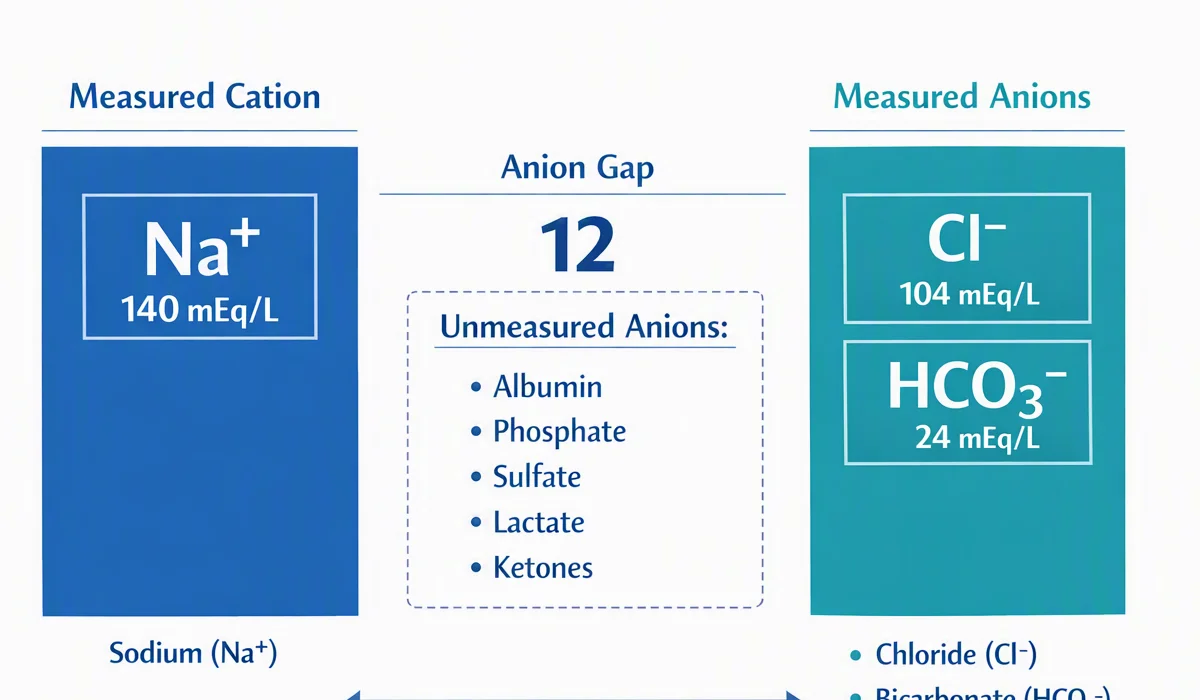
How to Determine the Anion Gap
The standard anion gap formula is written as:
Anion gap = serum sodium - (serum chloride + serum bicarbonate)
This is commonly called the “ sodium minus chloride and bicarbonate” approach. With the numbers from a routine electrolyte panel, you deduct the sum of chloride and bicarbonate from sodium. The result offers a quick estimate of whether the patient has a usual or raised gap pattern.
As an example, if serum sodium is 140, serum chloride is 110, and serum bicarbonate is 20, the anion gap is 10. That may fall within a typical lab reference range, depending on the local method and analyzer. A result like this in a patient with low bicarbonate suggests normal anion gap metabolic acidosis, which is often associated with high chloride acidosis.
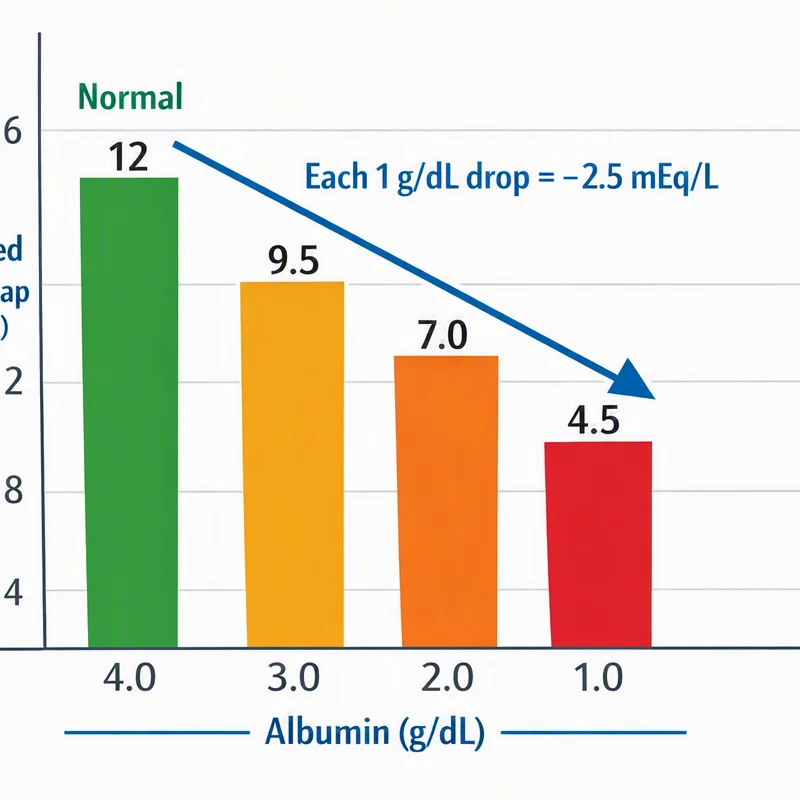
Many providers also look at the albumin-corrected anion gap. Because albumin is a major unmeasured anion, low albumin can make the measured anion gap appear falsely normal or even low. A corrected calculation adjusts for this and can reveal a hidden elevation. This is especially relevant when the clinical picture points toward an acid load but the raw numbers are not striking.
In practice, a calculator may use the electrolyte values directly and then show both the uncorrected and corrected result. That makes it easier to interpret the numbers alongside the patient’s overall serum chemistry and symptoms. When the result is borderline, the clinical context, blood gas findings, and trend over time become especially important.
How High Chloride Acidosis Leads to a normal gap
high chloride acidosis is also called hyperchloremic metabolic acidosis, a form of normal anion gap metabolic acidosis. The main idea is that bicarbonate is depleted, and chloride goes up to preserve electrical neutrality. For that reason, the calculated gap may stay normal even though the patient is clearly acidemic or has a low serum bicarbonate.
This is why a normal anion gap does not mean the situation is benign. In this type of metabolic acidosis, the body is often experiencing bicarbonate loss with compensatory chloride conservation. The calculator may show a reassuring number, but the underlying disorder can still be clinically significant and require prompt evaluation.
The pathophysiology is straightforward: when bicarbonate decreases, the body often retains chloride to preserve electroneutrality. That exchange keeps the measured gap from rising. The result is a chloride-predominant pattern that reflects the cause of the acid-base disorder rather than an accumulation of unmeasured acids. This is why anion gap interpretation should always be linked to the full acid-base picture, not used in isolation.
From a clinician's perspective, the important question is not just “Is the gap normal?” but “Why is bicarbonate low?” A normal gap with low bicarbonate directs attention toward GI losses, renal handling problems, or iatrogenic chloride load. This is where the anion gap calculator in this setting: it helps separate hyperchloremic disorders from elevated-gap disease.
Common Causes of High Chloride Acidosis
Various disorders typically result in high chloride acidosis. A detailed evaluation should consider both GI and renal sources, as well as iatrogenic causes. The most frequent causes include diarrhea, renal tubular acidosis, saline infusion, and intestinal fistula.
Diarrhea can cause substantial bicarbonate depletion from the gastrointestinal tract. When bicarbonate is lost in stool, chloride often goes up relative to bicarbonate, leading to a pattern of hyperchloremic metabolic acidosis. This is a classic cause of normal anion gap metabolic acidosis.
Renal tubular acidosis indicates impaired renal acid handling or bicarbonate reclamation. Depending on the subtype, the kidneys may fail to acidify urine appropriately or may waste bicarbonate. The result is often a ongoing acidotic state with a normal gap and relatively high chloride. This diagnosis often calls for a broader look at renal handling, serum potassium, and urine studies.
Saline infusion is an significant iatrogenic cause. Large volumes of chloride-rich fluids can raise serum chloride and dilute bicarbonate, producing a chloride elevation that resembles other causes of acidosis. In hospitalized patients, this is a frequent and sometimes overlooked reason for a normal gap pattern.
Intestinal fistula can also lead to ongoing bicarbonate loss. When digestive secretions are diverted or lost externally, the body may develop persistent bicarbonate depletion with compensatory chloride retention. In all of these cases, the calculator output should be interpreted together with the patient’s history, volume status, and recent treatments.
When the Anion Gap Is Elevated Instead
Although high chloride acidosis typically has a normal gap, an elevated result shifts the clinical differential considerably. A unexpectedly high anion gap points toward accumulation of unmeasured acids. Typical causes include lactic acidosis, ketoacidosis, uremia, and toxic alcohol ingestion.
Lactic acidosis occurs when tissue hypoperfusion, hypoxia, seizures, severe infection, or other stressors increase lactate production. This is a major cause of elevated-gap metabolic acidosis and may require urgent evaluation of perfusion and oxygenation.
Ketoacidosis can occur in diabetic ketoacidosis, alcoholic ketoacidosis, or starvation states. In these cases, ketone bodies build up and expand the gap. The clinical picture often includes dehydration, hyperglycemia or low intake, and an acidotic state that can deteriorate rapidly.
Uremia from advanced kidney dysfunction can also increase the anion gap because the kidneys cannot clear acid efficiently. Retained organic acids add to the gap and can coexist with other electrolyte abnormalities.
Toxic alcohol ingestion is another dangerous cause. Substances such as methanol or ethylene glycol can generate acidic metabolites and create a critical high-gap pattern. When the calculator shows an elevated gap in an unclear clinical setting, urgent toxicology-focused assessment may be needed.
The key point is that a standard gap suggests one set of mechanisms, while an elevated gap suggests another. That separation helps clinicians move from a broad laboratory abnormality to a more targeted differential diagnosis.
Interpreting Findings Clinically
An anion gap result should consistently be read alongside the arterial blood gas and the rest of the overall presentation. A patient may have a normal gap calculation but still have overt metabolic acidosis on blood gas testing. Conversely, a patient may have a borderline value that becomes more meaningful once albumin and other factors are reviewed.
One useful strategy is to establish the acid-base disorder first. If the arterial blood gas shows acidemia with low bicarbonate, the next question is whether the pattern is high gap or normal gap. If the gap is normal and chloride is high, that supports hyperchloremic metabolic acidosis. If the gap is high, the workup broadens toward lactate, ketones, renal failure, or toxins.
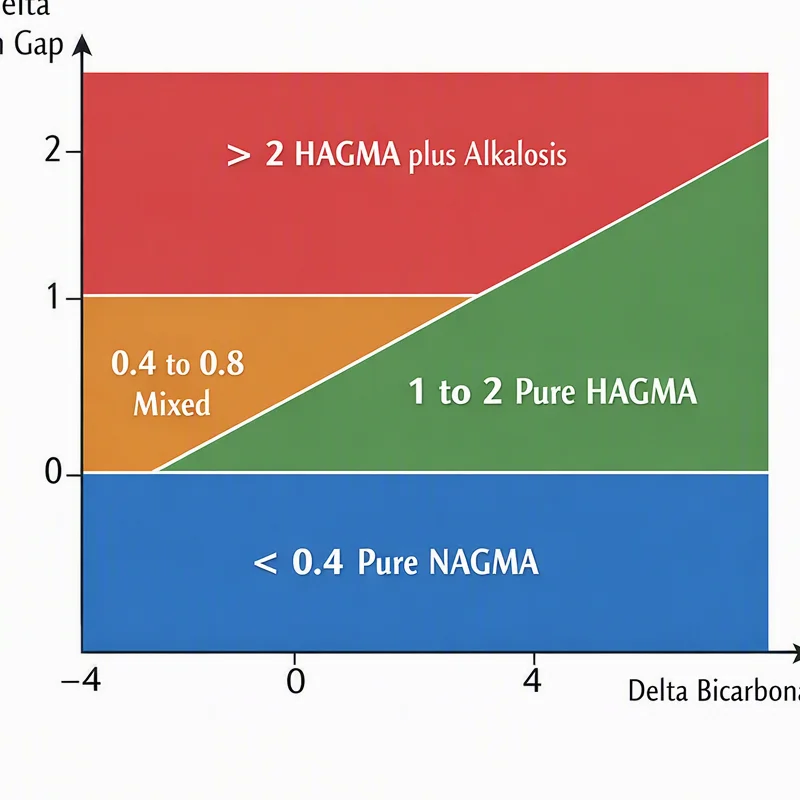
The delta gap can be helpful when the anion gap is elevated. It compares the rise in the gap to the fall in bicarbonate and can indicate whether there is a mixed disorder. For example, a higher-than-expected delta gap may indicate concurrent metabolic alkalosis, while a smaller-than-expected change may imply an additional normal-gap acidosis. Although delta gap use is more common in complex cases, it can enhance acid-base analysis when a simple calculator result is not enough.
Serum potassium is another key piece of data. Low or high potassium can point to specific causes, especially in renal tubular acidosis or GI losses. Potassium abnormalities also affect treatment decisions. In other words, the gap is only one part of the acid-base puzzle; the rest of the clinical assessment includes potassium, renal function, volume status, and recent exposures.
Practical interpretation often uses this sequence:
- Confirm low bicarbonate and assess blood gas results.
- Check whether the anion gap is normal or elevated.
- Look for chloride elevation if the gap is normal.
- Review serum potassium and kidney function.
- Use history to identify diarrhea, saline infusion, or toxin exposure.
This approach turns the calculator from a number generator into a genuine decision-support tool.
Drawbacks of an Anion Gap Calculator
An anion gap calculator is helpful, but it is not entirely accurate. One major issue is the effect of albumin level. Because albumin is the main unmeasured anion, hypoalbuminemia can reduce the apparent gap and hide a true elevation. That is why the albumin-corrected anion gap is often more useful than the raw number.
Another limitation is variation in the lab reference range. Different analyzers and institutions may use slightly different methods, so the “normal” range can shift. A result that is normal in one setting may be flagged differently in another. This makes local calibration and context important for accurate diagnostic interpretation.
Measurement error can also affect the calculation. Small inaccuracies in sodium, chloride, or bicarbonate can shift the result enough to alter interpretation, especially when values are close to the cutoff. If the clinical picture does not match the number, repeating labs or checking for specimen issues may be appropriate.
Finally, a calculator does not replace clinical judgment. It cannot determine whether the acidosis is acute or chronic, whether there is a mixed disorder, or whether a patient needs urgent intervention. It supports decision-making, but the real value comes from combining the number with symptoms, exam findings, medications, and the broader biochemical profile. The best use of the calculator is as part of a structured corrected calculation and complete acid-base evaluation.
FAQs About Anion Gap and High Chloride Acidosis
What is an anion gap calculator used for in high chloride acidosis?
An anion gap calculator is used to quickly assess whether a patient’s low bicarbonate is due to high chloride acidosis with a normal gap or to a different cause of metabolic acidosis with an elevated gap. It helps direct the metabolic acidosis workup by linking electrolyte values to possible causes.
Why can high chloride acidosis have a normal anion gap?
High chloride acidosis can have a normal gap because bicarbonate is lost while chloride rises to maintain electroneutrality. This produces hyperchloremic metabolic acidosis or normal anion gap metabolic acidosis, so the calculated gap may stay normal even though the patient is acidotic.
How do you calculate the anion gap from lab values?
Use the anion gap formula: serum sodium minus the sum of serum chloride and serum bicarbonate. In formula form, it is sodium - (chloride + bicarbonate). This comes directly from the electrolyte panel and can be done by hand or with an anion gap calculator.
When should the anion gap be corrected for albumin?
The gap should be corrected when albumin is low or when the clinical picture suggests a hidden gap despite a normal raw result. An albumin-corrected anion gap can uncover elevated-gap disease that would otherwise be missed, especially in sick patients with abnormal laboratory values.
What conditions commonly cause hyperchloremic metabolic acidosis?
Common causes include diarrhea, renal tubular acidosis, saline infusion, and intestinal fistula. These conditions typically cause bicarbonate loss or impaired https://telegra.ph/What-May-Cause-a-Below-Normal-Anion-Gap-An-Anion-Gap-Calculator-Reference-08-29 renal handling, leading to chloride elevation and a normal anion gap pattern. Other causes may also be reviewed during the differential diagnosis.